
Did the Nazis Let Concentration Camp Victims Keep Their Belongings?
Last updated: October 2026
The search phrase ‘how did the Nazis let concentration camp victims keep all things snatch work’ bundles three questions: did prisoners keep their belongings, what happened to property taken from them, and what does the odd phrase ‘snatch work’ mean. This guide serves general readers, students, and family-history researchers who want plain answers before reading deeper histories. It separates official confiscation from camp-issued clothing, organized sorting, personal theft by guards, and postwar restitution. One limit: camp rules differed widely by camp and date, so this page explains the system rather than what happened to a particular suitcase.
- Did Concentration Camp Victims Keep Their Belongings?
- What Was Taken on Arrival and What, if Anything, Was Returned?
- What Were Prisoners Allowed to Keep Inside the Camp?
- How Did the ‘Canada’ Barracks Handle Stolen Belongings?
- What Does ‘Snatch Work’ Mean in Camp and Ghetto Contexts?
- Who Looted Prisoner Property Beyond the Official Confiscation System?
- Could Survivors Recover Belongings After Liberation?
- Frequently Asked Questions
- Confiscation was policy, not accident: officials registered property, removed it, and redistributed it through official channels.
- Prisoners kept only narrow exceptions, such as spectacles or shoes, and those were privileges rather than rights.
- ‘Kanada’ was the Auschwitz-Birkenau sorting complex where stolen belongings were processed and shipped onward.
- ‘Snatch work’ most plausibly means forced labor in that sorting and transport system, not a concession to victims.
- Recovery after 1945 was rare, and restitution compensated a fraction of losses and demanded paperwork most survivors lacked.
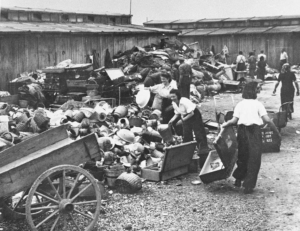
Confiscation followed a procedural path, not random theft. That is why camp paperwork often lists property that never came back. why Japan’s Pearl Harbor gamble failed against a sleeping giant.
Did Concentration Camp Victims Keep Their Belongings?
No. Nazi policy treated prisoner property as loot from the point of arrest, and camp administrations took most belongings during registration. Victims kept only narrow, rule-bound exceptions, such as spectacles, sturdy shoes, or hygiene items in some camps. Those exceptions depended on the camp, the year, and the prisoner category, so no general right to keep possessions ever existed.
Four myths obscure this history. Clearing them up first makes survivor testimony and camp documents easier to follow.
- Myth: prisoners lived with their own suitcases. Reality: prisoners surrendered luggage at arrival; it went to a property room before sorting, so whatever a prisoner carried afterwards was usually camp-issued.
- Myth: property sat in storage and was handed back in 1945. Reality: most confiscated goods were redistributed, sold, or destroyed long before liberation, and only a small share survived to be claimed.
- Myth: ‘snatch work’ meant prisoners snatching back their own things. Reality: the phrase most plausibly describes a forced-labor detail that handled confiscated property, not a concession to victims.
- Myth: keepsakes survived because guards were lenient. Reality: small items survived through inconsistency, bribery, and concealment rather than through any entitlement.
That distinction matters because confiscation happened in layers. Officials took property under regulations, sorting and sales moved it onward, and individual theft sat on top. Confusing those layers produces muddled questions about whether victims were ‘allowed’ to keep things.
What Was Taken on Arrival and What, if Anything, Was Returned?
Guards usually took luggage, valuables, personal documents, and civilian clothing during registration and disinfection. Prisoners received camp clothing and rarely got property back. Arrival paperwork doubled as a record of theft: clerks noted names, dates, and effects, then the effects vanished into camp storage.
Registration, disinfection, and clothing exchange
Registration came first and turned a person into a number with a file. Clerks wrote down personal details, often including a list of effects handed over. Disinfection followed; camp authorities claimed hygiene as the reason for stripping new arrivals.
Civilian clothing then went into a clothing store, and prisoners received replacement garments. Those replacements belonged to the camp, not the prisoner, so a uniform could be reclaimed, reassigned, or replaced without the prisoner’s consent.
Luggage, valuables, and personal documents
Officials removed suitcases, money, jewellery, identity papers, and family photographs in the same sequence. Some camps issued receipts for deposited valuables, but a receipt mattered only if the depositor survived and the office still existed at liberation. Both conditions were rare.
Family-history researchers often ask about letters and photographs. Because those items had no resale value to the SS, officials frequently destroyed them rather than storing them, which helps explain why so few personal documents surface in postwar archives.
- A prisoner arrives; clerks register the prisoner and record personal details and effects.
- Disinfection and a clothing exchange follow; civilian garments come off.
- Officials take luggage, valuables, and documents into camp custody.
- Camp clothing is issued; the prisoner may keep only limited items such as spectacles or shoes if rules permit.
- Workers sort confiscated property in barracks such as Kanada and route it to SS agencies.
- After liberation, only a small fraction of that property is recoverable through restitution.
What Were Prisoners Allowed to Keep Inside the Camp?
Prisoners could sometimes keep small items such as glasses, shoes, hygiene items, or family photographs, but these were exceptions to a broader system of confiscation, not a general right to keep belongings. Whether an exception was granted depended on the camp commandant’s regulations, the prisoner’s work assignment, and the period.
Items most often tolerated included:
- Spectacles and other corrective lenses, because a prisoner who could not see was useless as a laborer.
- Sturdy shoes in some camps, particularly for prisoners assigned to outdoor work details.
- A tin bowl, spoon, or cup, which were often issued rather than owned.
- Small hygiene items obtained later through parcels or the camp black market.
- Occasional keepsakes such as a photograph or a religious item, usually concealed rather than approved.
Surface-level summaries miss the gap between ‘keeping’ and ‘using’. Camp-issued objects stayed camp property even while a prisoner used them daily, so a bowl or blanket could disappear at any roll call. Objects genuinely kept had to be small, useful, and easy to hide.
Timing also mattered. Regulations tightened and loosened as camps expanded, so a prisoner arriving in 1940 could face different rules from one arriving in 1944. Anyone reading a family memoir should verify the camp and the date before assuming a specific practice applied.
How Did the ‘Canada’ Barracks Handle Stolen Belongings?
‘Canada’ was the nickname for the Auschwitz sorting complex where workers sorted, stored, and routed confiscated property to SS agencies rather than returning it to prisoners. Polish prisoners coined the name because Canada seemed, in their imagining, a land of unimaginable plenty.
The complex sat within the Auschwitz II-Birkenau area and consisted of numerous barracks handling different categories of goods. Clothing, footwear, food, medicines, currency, and valuables each moved along separate channels. According to the Anne Frank House’s overview of the Holocaust, camps formed part of a wider system of persecution in which property seizure was routine rather than incidental.
Prisoner labor details performed the sorting under SS supervision, then forwarded goods to SS economic agencies for redistribution, sale, or shipment to Germany. Stolen property therefore rarely stayed in one place for long.
“Auschwitz was not a single site but a complex of three main camps, which is why property sorting operated as an organized industrial process.”
Prisoners assigned to Kanada details faced a peculiar horror: brief access to goods they could never legally own, surrounded by evidence of other people’s lives. Survivor testimony describes smuggling food or small valuables back into the camp, where such items functioned as currency for extra rations or medicine.
What Does ‘Snatch Work’ Mean in Camp and Ghetto Contexts?
‘Snatch work’ most likely refers to forced labor involving sorting, moving, or processing confiscated property, not permission for victims to keep or snatch belongings for themselves. The phrase appears in half-remembered family stories and popular retellings that merge several camp realities into one.
Several clues support the labor reading. Camp vocabulary already contained work details dedicated to property: the Kanada commando at Auschwitz-Birkenau and the Effektenkammer, the property room where stored belongings were held. Both roles involved handling other people’s possessions under guard, hour after hour.
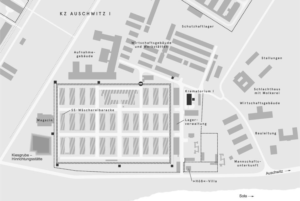
Sorting barracks divided stolen goods into categories, which explains why a single suitcase could be broken up into clothing, cash, and documents travelling separate routes.
Two further ambiguities keep the phrase confusing. First, ‘snatch’ in English slang can mean stealing, so readers assume the work involved prisoners taking things. Second, ghetto contexts also involved forced labor collecting and sorting seized property, which blurs the camp and ghetto versions together.
This article does not trace the phrase’s etymology or translation history; no reliable source fixes its origin. Instead, check the document or testimony where the phrase appears and see whether it names a work detail, a location, or a person’s role.
Who Looted Prisoner Property Beyond the Official Confiscation System?
Guards, SS personnel, and camp staff also stole or diverted prisoner property, so official confiscation and personal looting overlapped. Confiscation took place on paper with regulations attached; looting happened in corridors, at gates, and inside barracks.
Everyday theft followed recognizable patterns. Guards searched arrivals and pocketed small valuables before they were registered. Block elders and Kapos requisitioned clothing or food parcels for themselves. Packages from home, one of the few lifelines prisoners had, were routinely intercepted.
Camp slang captured the practice: prisoners used the German term ‘organisieren’ for obtaining goods illegally, a word that blurred the line between survival and theft. Historians have documented cases in which SS judicial authorities investigated camp personnel for corruption, yet enforcement was uneven and penalties often light.
According to HISTORY’s account of the Holocaust and the camp system, the scale of plunder was central to how the regime financed and sustained its machinery of persecution. That framing helps explain why so little property was ever formally accounted for.
Could Survivors Recover Belongings After Liberation?
Recovery was rare: many belongings were destroyed, redistributed, taken by officials or guards, or became untraceable, and postwar restitution covered only a small fraction of lost property. Liberation in 1945 ended the confiscation system but did not reverse it.
Three obstacles stood between survivors and their property. Objects had physically dispersed across Germany and occupied Europe, paperwork had been destroyed or never existed, and the people best placed to identify goods were often the ones who had died. For most families, a wedding ring or a photograph was simply gone.
Restitution developed slowly. Allied authorities introduced claims processes in the late 1940s, and organizations such as the Jewish Restitution Successor Organization and the Conference on Jewish Material Claims Against Germany, founded in 1951, handled large numbers of claims. Compensation replaced value; it did not return objects.
| Stage or location | What was typically confiscated | What prisoners could typically keep | Who handled the property |
|---|---|---|---|
| Arrival registration | Personal details recorded; small items surrendered | Almost nothing beyond what was worn | Camp registration office |
| Disinfection and clothing exchange | Civilian clothing and shoes | Sometimes spectacles; occasionally shoes if rules allowed | Camp clothing store and property room |
| Luggage and valuables deposit | Suitcases, money, jewellery, documents, photographs | Sometimes a receipt, rarely honoured | Camp property store, later SS agencies |
| Kanada sorting | Property already confiscated, sorted by category | Nothing lawful; smuggling occurred | Prisoner work details under SS supervision |
| Guard or SS theft | Anything not yet removed, including food parcels | Nothing guaranteed | Individual guards, Kapos, block elders |
| Post-liberation restitution | Not confiscation: claims assessment | A fraction of value, rarely the original objects | Allied authorities, later German and Jewish restitution bodies |
Use this when researching what happened to one family’s belongings.
- Record the exact camp name and arrival date, because rules changed by camp and by year.
- Confirm whether the deportation went to Auschwitz-Birkenau, where Kanada sorting operated.
- Search memorial-site archives and the Arolsen Archives for registration and effects records.
- Ask a national restitution authority or a Holocaust restitution organization about deadlines and documents.
- Treat family stories of a returned suitcase as a lead to verify, not as proof.
This article cannot determine what a specific family member kept, and it cannot recover property for an individual. Camp rules varied widely by camp and date, and any restitution claim needs guidance from official archives, memorial sites, or a qualified legal adviser.
Frequently Asked Questions
Did concentration camp prisoners keep their belongings?
Largely no. Most property was confiscated during registration, and prisoners received camp clothing in place of civilian garments. A minority retained small items such as spectacles, a bowl, or sturdy shoes when camp rules permitted it. Those exceptions varied by camp and period, so they cannot be described as a general right to keep belongings.
What happened to concentration camp victims’ belongings?
Confiscated property was sorted, stored, and redistributed. Clothing and valuables went to SS agencies, some goods were sold or shipped to Germany, and other items were destroyed or taken by individual guards. Very little remained traceable by 1945, which is why families so rarely recovered original objects.
What did Nazi confiscation of prisoner property involve?
It involved a sequence rather than a single act: registration recorded the prisoner and their effects, disinfection removed civilian clothing, and luggage, valuables, and documents were deposited in camp custody. The stored property then entered sorting and distribution channels. Receipts were sometimes issued but rarely honoured after the war.
What were the Canada barracks at Auschwitz?
‘Kanada’ was the prisoners’ nickname for the sorting complex at Auschwitz II-Birkenau where confiscated property was processed. Barracks handled separate categories such as clothing, shoes, food, and valuables before goods were forwarded to SS agencies. Polish prisoners chose the name because Canada symbolized distant wealth.
What was ‘snatch work’ in concentration camps?
The phrase is not a standard historical term, but it most plausibly describes forced labor sorting, moving, or processing confiscated property. It does not mean victims were permitted to keep or reclaim belongings. Anyone encountering the phrase should check the document or testimony where it appears for the specific work detail it names.
Did guards and SS steal prisoner belongings?
Yes. Beyond official confiscation, guards, Kapos, and block elders diverted property for themselves, intercepting valuables at arrival and parcels from home. Camp slang used the term ‘organisieren’ for obtaining goods illegally. Some corruption cases reached SS judicial authorities, though enforcement was uneven and penalties often lenient.
Could survivors recover their belongings after liberation?
Rarely. Property had dispersed across Europe, records were destroyed, and many owners had died. Postwar restitution programmes handled claims from the late 1940s onward, and organizations such as the Conference on Jewish Material Claims Against Germany, founded in 1951, processed large numbers of them. Compensation replaced value rather than returning original items.
Conclusion
The answer to the question this article opened with is unambiguous: the Nazis did not let concentration camp victims keep their belongings. Official confiscation, camp-issued clothing, Kanada sorting, guard and SS looting, and narrow keepsake exceptions were separate layers of one system, and the garbled phrase ‘snatch work’ most likely describes labor inside that system rather than any concession to prisoners. If you are researching a specific family, your next step is to request the person’s registration records from the relevant memorial site or the Arolsen Archives.
Sources and Further Reading
- What is the Holocaust? | Anne Frank House
- Auschwitz Concentration and Death Camp
- Holocaust: Concentration Camps, Deaths & Legacy | HISTORY
In-Depth Guide
Nazi prisoner property confiscation was not a single moment at a camp gate but a bureaucratic process that began before arrival and continued through registration, storage, redistribution, and, in some cases, destruction. Understanding how it worked requires looking at the overlap between camp administration and SS economic offices, because belongings were both a source of immediate profit and a means of stripping prisoners of identity and future resources. The seized goods could include clothing, shoes, jewelry, cash, letters, photographs, religious objects, and tools of trade—items whose loss affected survival chances and postwar recovery alike.
From Intake to the Effektenkammer: Confiscation of Personal Belongings
During intake, guards and camp clerks often took clothing, jewelry, money, documents, religious items, and even prosthetics. These items were inventoried, sometimes with receipts or tags, and stored in camp facilities such as the Effektenkammer (property room). In theory, property was to be held and returned; in practice, the system was riddled with theft, loss, and deliberate disposal. The phrase confiscation of personal belongings only partly captures this reality, since many items were converted into cash, exchanged for camp supplies, or sent to SS warehouses and economic agencies. Some property entered looted property distribution networks that reached beyond the camp perimeter.
The process was closely tied to prisoner registration and intake procedures. The numbers assigned to prisoners replaced names in many records, while property lists were filed separately and often incompletely. This fragmentation makes it difficult to reconstruct individual losses. Camp administration and SS economic offices used confiscated goods to fund operations, reward personnel, or supply other institutions. Money and valuables could be deposited into accounts controlled by the SS, while clothing and useful items entered redistribution chains. In some camps, property rooms became semi-permanent warehouses, with staff sorting, storing, and shipping goods according to orders from higher SS authorities.
After liberation, the recovery of property was rare. Some camps kept extensive ledgers, but Allied forces and postwar authorities faced chaotic conditions, missing records, and displaced survivors. The history of Nazi prisoner property confiscation therefore sits at the intersection of Holocaust looting, camp bureaucracy, and postwar restitution. It shows that property seizure was not incidental to the camp system but a structured practice that reinforced dehumanization and generated material benefit for the perpetrators.
Additional FAQs
Could families reclaim property seized from prisoners?
In most cases, no—not as individual items. Postwar restitution programs sometimes provided compensation or addressed broader claims, but confiscated belongings were often commingled, sold, transferred, or destroyed. Families rarely recovered specific objects, and paperwork was frequently incomplete because prisoners were recorded by number rather than name.
What records help trace confiscated prisoner property today?
Researchers use camp ledgers, Effektenkammer inventories, transport and intake lists, SS economic records, and postwar restitution files. These sources are often fragmentary and scattered across archives, so tracing specific property usually depends on cross-referencing prisoner numbers, dates, and camp administrative records rather than expecting a single complete list.