
![Modern bridge with embedded AI sensors and structural health monitoring data visualization [conversation_history]](https://historysprout.com/wp-content/uploads/2026/01/unnamed-2026-01-21T201734.882.webp)
Long before steel and concrete, ancient builders used the materials they had on hand:
- Fallen tree trunks laid across rivers
- Rope and vine suspension bridges in mountainous regions
- Rough stone slabs forming simple beam bridges
These early structures were local, practical, and short-lived—but they set the stage for more advanced engineering.

How Romans revolutionized bridge building
The Romans didn’t invent bridges, but they turned bridge engineering into a systematic science. Their success came from:
- The arch: Roman stone arches distributed loads efficiently into the supports, allowing longer spans than flat stone beams.
- Pozzolana concrete: A volcanic ash–based concrete that hardened underwater, ideal for bridge foundations and piers.
- Standardized methods: Repeated designs, organized labor, and military engineering expertise.
Famous examples include:
- Ponte Sant’Angelo (Rome): A stone arch bridge still standing after nearly 2,000 years.
- Alcántara Bridge (Spain): A Roman stone arch bridge with spans that demonstrate remarkable precision for its time.
Why Roman bridges lasted so long
Many Roman bridges outlived empires. Key reasons:
- Over-engineering with large safety margins
- Massive stone blocks and thick piers
- Conservative spans and proven arch geometry
- Careful site selection and solid foundations
In a sense, Roman engineers traded material cost for reliability—something modern engineering, driven by efficiency and budgets, often cannot do to the same extent.
Medieval to Early Modern: Experimenting Beyond Stone
Medieval stone bridges and urban growth
In the Middle Ages, cities grew around river crossings, and bridges became economic lifelines. Many bridges served as:
- Market streets with shops and houses built on top
- Toll points for trade and travel
- Strategic military assets
While most medieval bridges still relied on stone arches, craftsmen experimented with:
- Pointed Gothic arches to reduce lateral thrust
- Timber trusses in smaller crossings
- Early multi-span wooden structures in northern Europe and Asia
The leap to iron: Industrial Revolution changes everything
By the 18th and 19th centuries, the Industrial Revolution brought:
- Iron foundries and new fabrication methods
- Railways demanding stronger, longer bridges
- Scientific approaches to loads, stress, and materials
A landmark structure was:
- The Iron Bridge (1779, England): The first major cast iron bridge, proving that metals could replace stone for long spans.
But new materials brought new failure modes. Cast iron, for example, was strong in compression but brittle in tension, leading to several catastrophic collapses when designs misunderstood its limits.
The Steel Age: Ambition and Risk
Steel and the rise of long-span bridges
By the late 19th century, steel became the dominant material for large bridges:
- Much higher tensile strength than iron
- Better ductility and reliability
- Enabling truss, cantilever, suspension, and arch combinations
Icons of this era include:
- Brooklyn Bridge (1883): Hybrid cable-stayed/suspension design, showcasing steel wires and modern construction methods.
- Forth Bridge (1890): A massive steel cantilever railway bridge in Scotland, built after a deadly failure at Tay Bridge forced stricter design rules.
Early lessons in safety: The Tay Bridge disaster
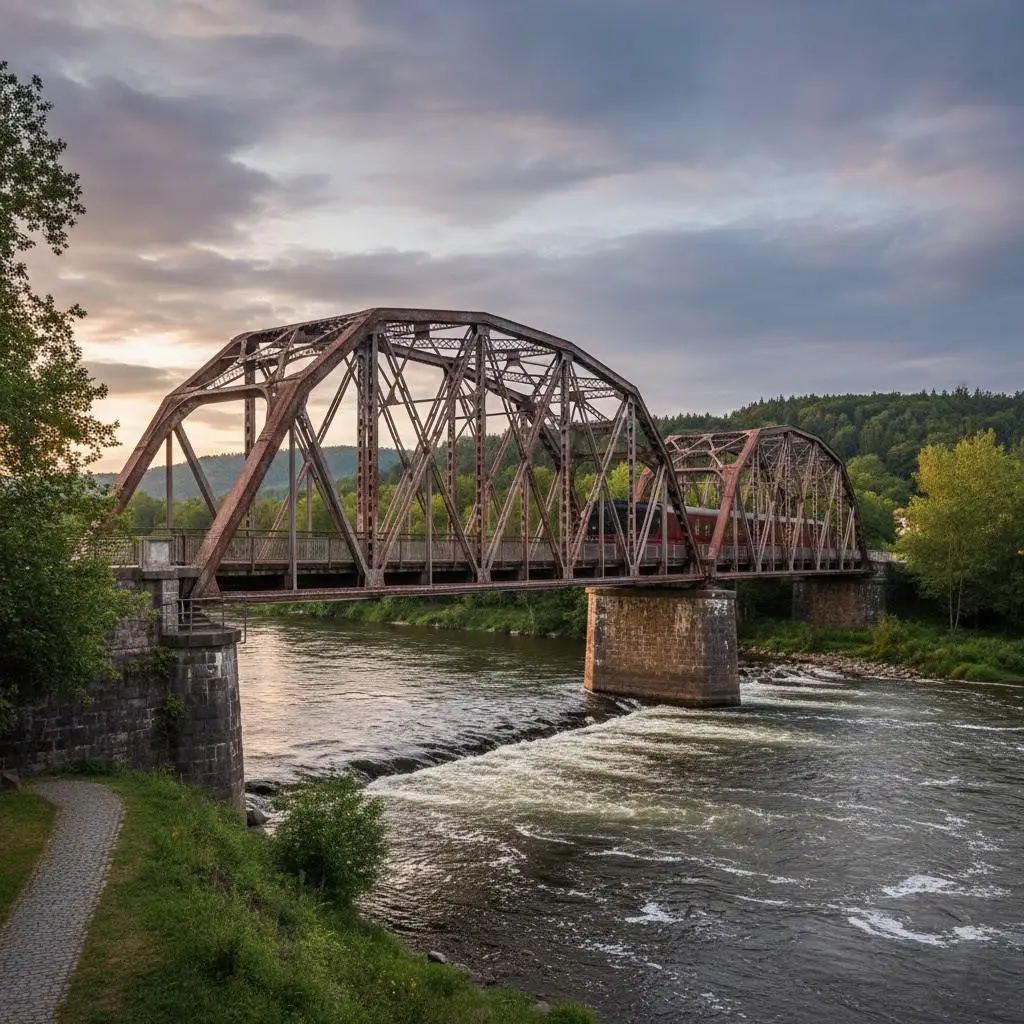
The Tay Bridge disaster (1879) in Scotland was a turning point. During a storm, the railway bridge collapsed as a train was crossing, killing around 75 people. Investigations found:
- Underestimation of wind loads
- Poor joints and detailing
- Inadequate inspection and maintenance
- Flawed engineering assumptions
The outcome: stricter wind loading codes, better material testing, and a more scientific approach to structural safety.
Modern Marvels and Modern Failures
Tacoma Narrows: When flexibility meets the wind
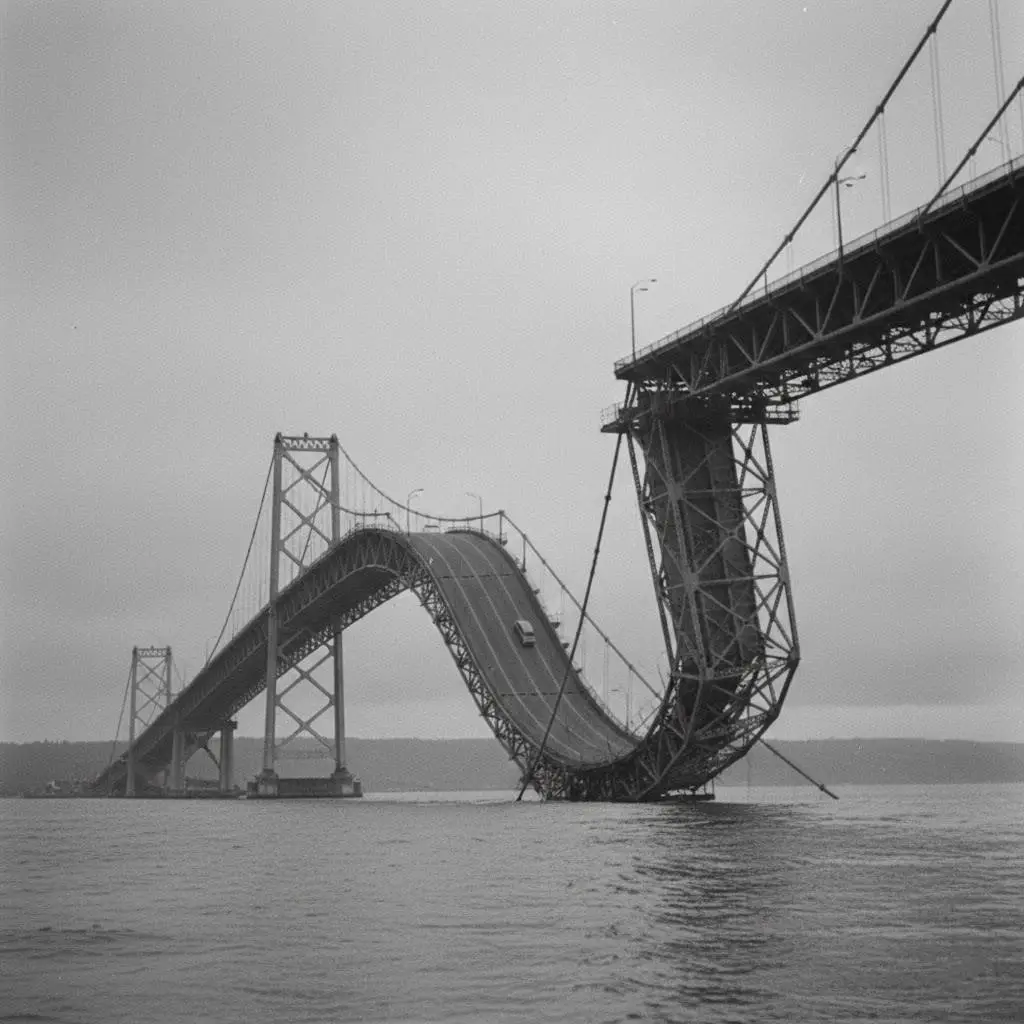
The Tacoma Narrows Bridge collapse (1940) in Washington state remains one of the most famous engineering failures. The slender suspension bridge twisted violently in the wind and collapsed only months after opening.
Key issues:
- Very narrow, flexible deck
- Inadequate aerodynamic understanding
- Vortex shedding and aeroelastic flutter not yet widely appreciated
What engineers learned:
- Bridges are not just static; they are dynamic systems.
- Wind tunnel testing became standard.
- Aerodynamic deck shapes and stiffening systems are now critical in design.
The London Millennium Bridge: The wobble heard around the world
The London Millennium Bridge (opened 2000) did not collapse—but it did wobble so much that the public nicknamed it the “Wobbly Bridge.”
What happened:
- Pedestrians unconsciously synchronized their steps with the bridge’s lateral sway.
- This synchronous lateral excitation amplified movements.
- The issue wasn’t strength, but comfort and dynamic behavior.
The fix:
- Installation of tuned mass dampers and viscous dampers.
- Detailed vibration analysis.
Lesson: even safe bridges must feel stable and comfortable, and human behavior can unexpectedly interact with structure dynamics.
Contemporary collapses: Design, construction, and maintenance
Even in the 21st century, bridge failures still occur due to:
- Design errors or incorrect load assumptions
- Construction mistakes or poor material quality
- Corrosion and long-term deterioration
- Overloading, extreme weather, or seismic events
- Inadequate inspection and maintenance
Each failure feeds back into modern codes, standards, and digital tools, reshaping how engineers model risk and resilience.
How Engineering Evolved: From Rules of Thumb to Digital Twins
From empirical design to structural analysis
For centuries, bridge builders relied on:
- Rules of thumb
- Past successful proportions
- Craft knowledge
By the 19th and 20th centuries, engineering shifted to:
- Analytical methods using statics and strength of materials
- Load combinations (dead load, live load, wind, seismic)
- Safety factors and limit states
Today, engineers use:
- Finite element analysis (FEA) to simulate complex shapes and load paths
- Nonlinear analysis to understand failure modes
- Probabilistic methods to quantify uncertainty and reliability
Materials: Concrete, steel, and composites
Modern bridge engineering combines materials strategically:
- Reinforced concrete: Concrete with embedded steel bars for tension resistance.
- Prestressed concrete: Steel tendons tensioned to put concrete in compression, reducing cracks and allowing longer spans.
- High-performance steel: Stronger, lighter, often more corrosion-resistant.
- Fiber-reinforced polymers (FRP): Used for strengthening existing bridges or building lightweight elements.
These innovations increase efficiency—but also demand sophisticated design, monitoring, and maintenance strategies.
AI, sensors, and smart bridges
On a site like ThinkAIWorld, the intersection of AI and infrastructure is especially important. Modern bridges increasingly rely on:
- Structural health monitoring (SHM): Networks of sensors measure strain, vibration, temperature, and displacement in real time.
- AI and machine learning: Algorithms analyze sensor data to detect anomalies, predict fatigue, and forecast maintenance needs.
- Digital twins: Virtual models of bridges that stay synchronized with real-world data, enabling simulations of “what if” scenarios.
This shift transforms bridges from static assets into continuously monitored, data-driven systems—potentially preventing failures before they happen.

Why Bridge Failures Still Matter
Each failure rewrites the rulebook
History shows that every major bridge disaster leads to:
- New design codes and safety standards
- Updated wind, seismic, and load models
- Better inspection and maintenance practices
- Deeper understanding of human-structure interaction
In other words, failures—while tragic—have driven some of the biggest leaps in structural engineering.
Balancing efficiency, cost, and safety
Modern engineers face a tough balance:
- Longer spans and slimmer decks save material and money.
- Iconic designs drive tourism and urban branding.
- But thinner margins leave less room for error.
Learning from past failures helps engineers navigate this tension. AI, automation, and smart simulations can explore thousands of design scenarios faster than any human team, helping to catch weak points early—but human judgment and ethics remain essential.
From Roman Arches to AI-Driven Bridges: What Comes Next?
The journey from Roman stone arches to AI-monitored, sensor-rich mega-bridges reveals a consistent pattern:
- We test the limits of new materials and methods.
- We sometimes misjudge those limits, with painful consequences.
- We then encode the lessons into better tools, codes, and technologies.
The future of bridge engineering will likely feature:
- Wider adoption of AI-based predictive maintenance
- Autonomous inspection drones and robotic repair systems
- More resilient designs that factor in climate change, extreme weather, and evolving traffic patterns
- Deeper integration between civil engineering and data science
Bridges will always be physical structures—but increasingly, their safety will depend on invisible layers of data and intelligence.










Leave a Reply