
If you often share large files like PDFs, images, or videos, you know how frustrating slow uploads and size limits can be. A file compressor is the easiest way to reduce your file sizes online. In this post, we’ll show you how to use a file compressor, its benefits, and why it’s essential for saving storage space, bandwidth, and time.
What Is a File Compressor?
- A file compressor is a tool that reduces the size of your files, including PDFs, images, videos, and documents.
- Good compressors reduce file size without losing quality.
- Most online file compressors work in your browser, so you don’t need to install any software.
When to Use a File Compressor
- Sending large files via email or messaging apps with size limits.
- Uploading images or PDFs to a website or blog—compressed files help your pages load faster.
- Saving storage space on mobile, cloud, or computer.
- Sharing videos or audio online—compression makes uploads and streaming faster.
How to Compress Files Using a File Compressor
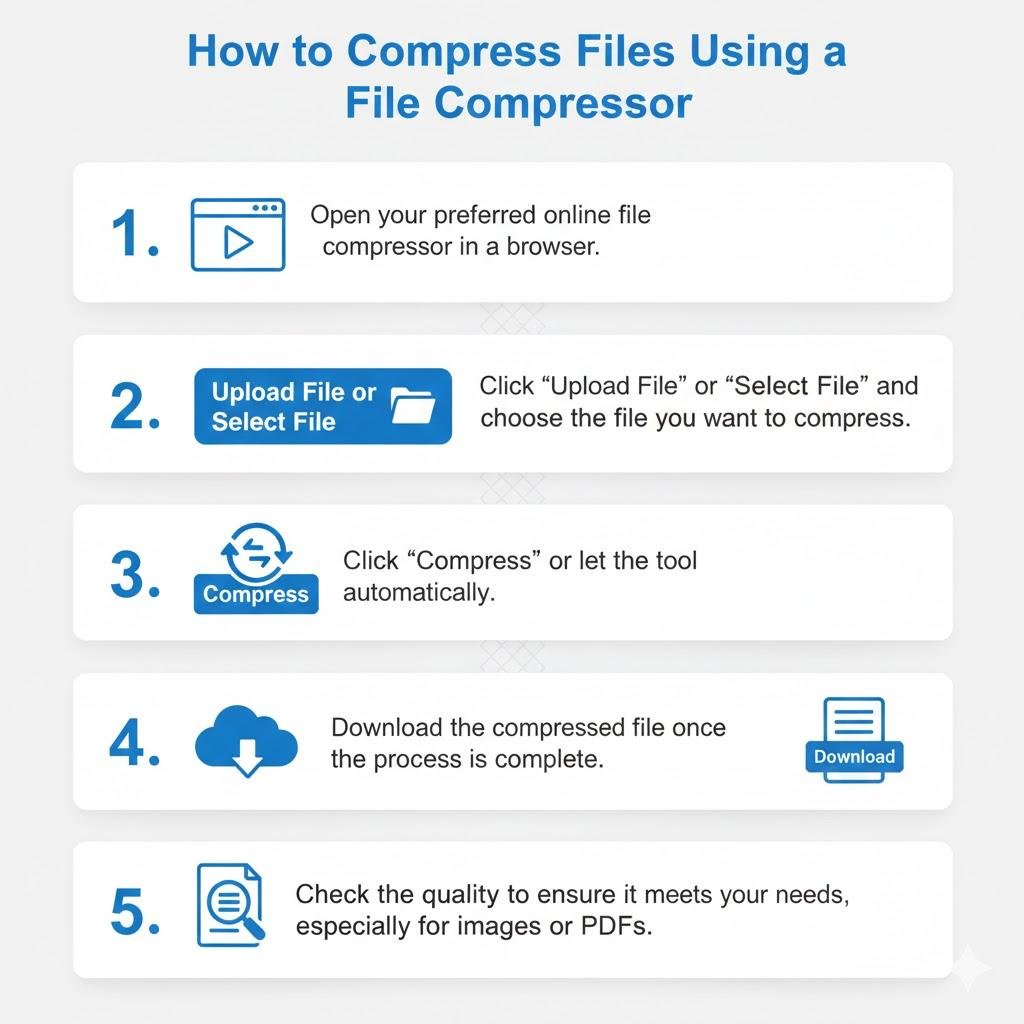
- Open your preferred online file compressor in a browser.
- Click “Upload File” or “Select File” and choose the file you want to compress.
- Click “Compress” or let the tool compress automatically.
- Download the compressed file once the process is complete.
- Check the quality to ensure it meets your needs, especially for images or PDFs.
Benefits of Using a File Compressor
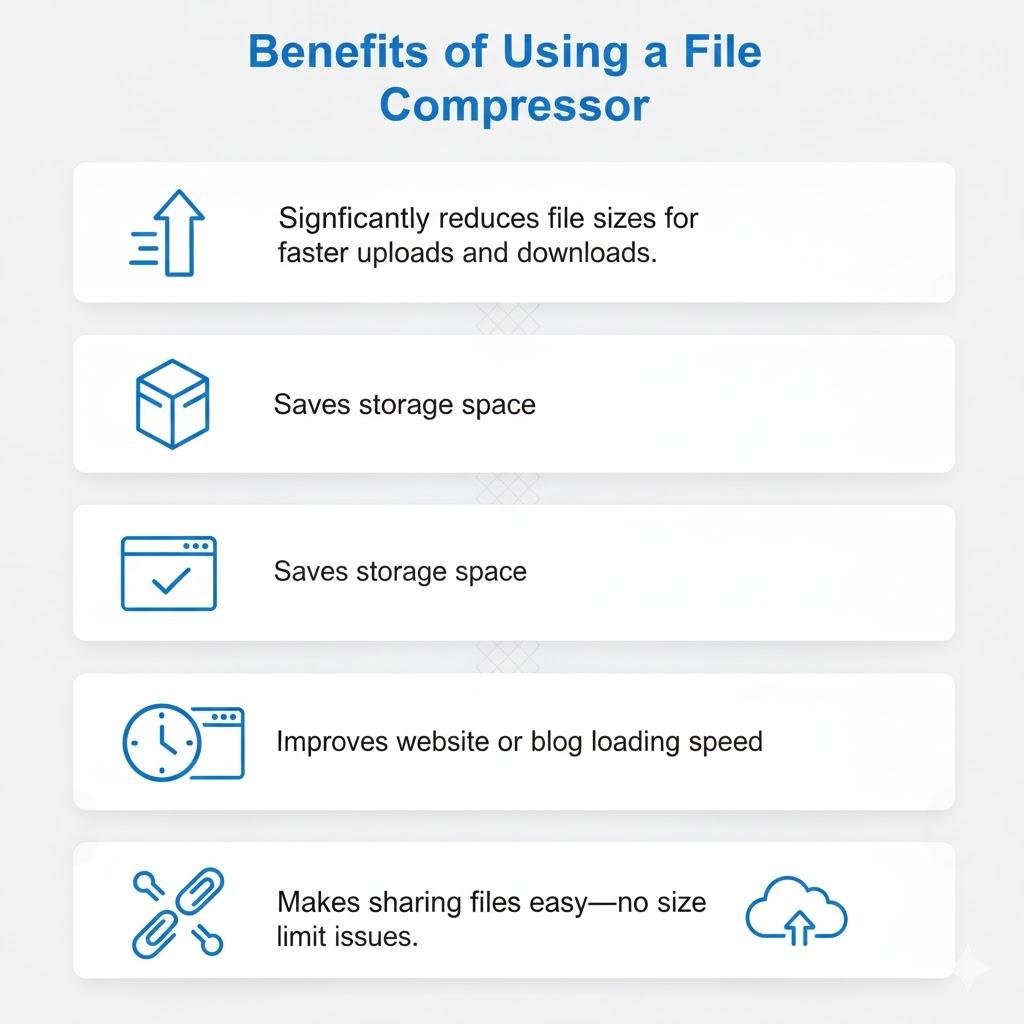
- Significantly reduces file sizes for faster uploads and downloads.
- Saves storage space.
- Improves website or blog loading speed.
- Makes sharing files easy—no size limit issues.
Considerations:
- Low-quality compressors may reduce file quality.
- Repeated compression can cause quality loss.
- Some tools limit file types or maximum size.
Conclusion
A file compressor is an essential tool for anyone who works with large files. It helps save storage space, speeds up file sharing, and keeps your workflow efficient. For a reliable option, try NSMGraphic Online File Compressor today.








Leave a Reply