
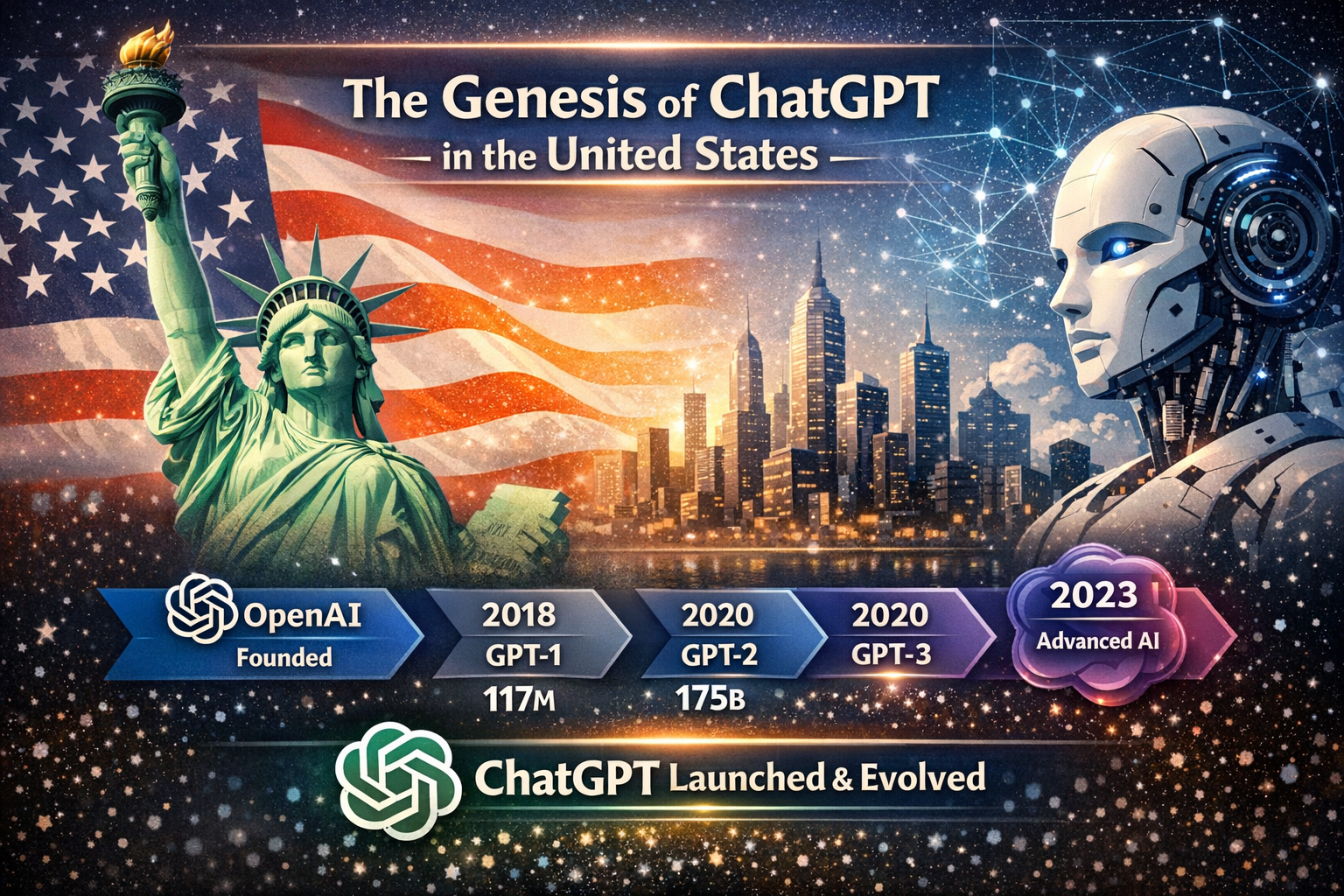
Imagine that you ask a computer a question and receive strangely human-like answers. It is possible with ChatGPT, a product of bold innovations originating right here in the United States. Since its sensational debut, this AI giant has revolutionized how we work, produce and interact. In this article, we’ll track ChatGPT development from the early days of OpenAI to its current American-sustained leaps.
How OpenAI Was Founded: the Origin
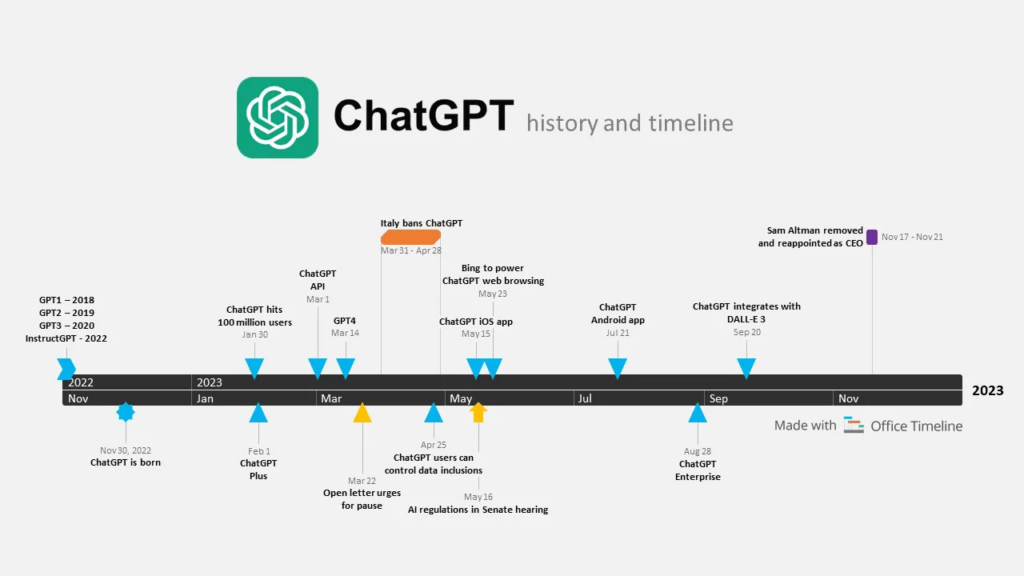
For ChatGPT, this was the beginning of its story In December 2015, OpenAI was formed by a group of tech visionaries–including Elon Musk–as a healthily run nonprofit. Their goal was, in a word: to develop AGI or artificial general intelligence for the world.
A promising early direction involved research on reinforcement learning and large language models (LLMs).
The U.S. roots of the TARS project in Austin. Silicon Valley talent and money both contributed, most notably a $1 billion pledge by founders.
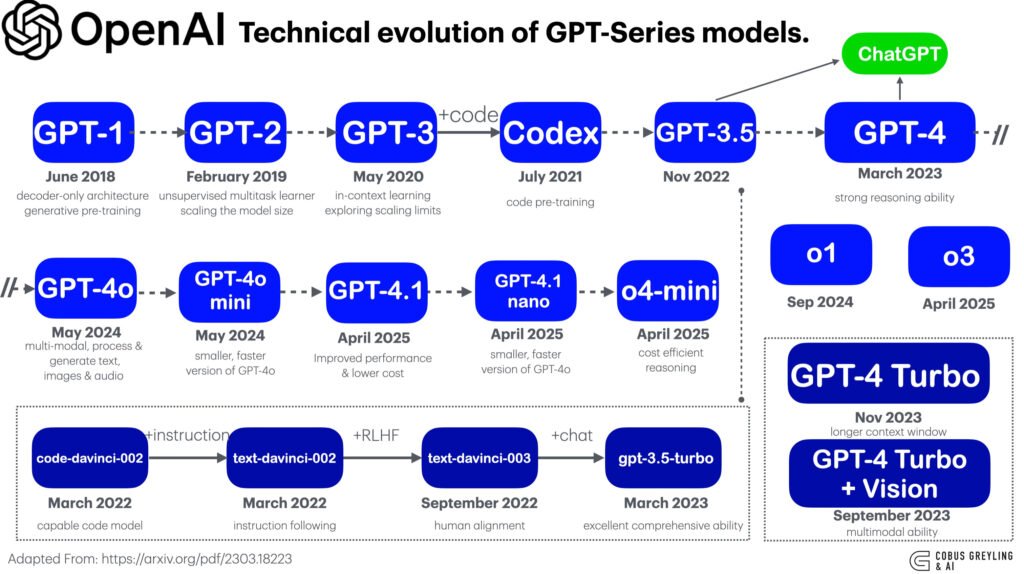
By 2018, GPT-1 had set a successful precedent. With this breakthrough model trained on books and articles, AI was finally able to generate coherent human level text. The result was ChatGPT.
GPT Models: The Building Blocks of ChatGPT
OpenAI delivered quick versions that altered the game—created entirely in US labs.
GPT-2: The Viral Sensation (2019)
Boasting 1.5 billion parameters, GPT-2 was capable of writing news articles and poetry. OpenAI did not immediately fully release it for fear of abuse, which would go on to spark an international debate over AI ethics.
GPT-3: Scaling to New Heights (2020)
With 175 billion parameters, GPT-3 propelled applications into copywriting helpers. US cloud behemoths like Microsoft were pouring billions into infrastructure as it prepared for the eventual launch of ChatGPT.
GPT-3.5 and ChatGPT Launch (November 2022)
A huge moment: ChatGPT arrives on the scene, combining GPT-3.5 with human reinforcement learning via feedback (RLHF). Within days, it already had 1 million users, faster than TikTok. US servers could handle the load, showing off the American tech muscle.
ChatGPT Milestones and US Innovations Post-Launch
ChatGPT didn’t stop at launch. OpenAI’s US teams rolled out updates at breakneck speed:
| Milestone | Date | Key Feature | US Impact |
|---|---|---|---|
| GPT-4 Release | March 2023 | Multimodal (text + images) | Boosted creative industries in NYC and LA. |
| ChatGPT Plus | February 2023 | Paid tier with priority access | Generated $100M+ revenue, funding US R&D. |
| GPT-4 Turbo | November 2023 | Faster, cheaper processing | Enabled enterprise adoption by Fortune 500 firms. |
| GPT-4o | May 2024 | Voice, vision, real-time responses | Integrated into apps like Siri rivals. |
| o1 Model | September 2024 | Advanced reasoning | Advanced US research in math/science AI. |
| 2026 Updates | Ongoing | Custom GPTs, API expansions | Aligns with US AI executive orders for safety. |
These churn down stages take AI US to governing laws: the larger model should have a better result. HSIUNGJanice Chih Chief Editor of Sing Tao Daily, US Edition
CHALLENGES AND REGULATIONS IN CHATGPT DEVELOPMENT IN THE US
What’s more challenges than ever? OpenAI faced numerous lawsuits over its data training and got into trouble with national security authorities because of its data. The new predicament seemed as though it would cause IBM to take over and disrupt policy firmly established on how IBM’s presence within United States territory would be recorded.
PUSHING AI ETHICS AND SAFETY
OpenAI adopted in it the water-marking for AI text provided in section 3.3 of an executive order by US President Biden (Government Order 2023). Arguments are under way in Washington about regulation–how to strike a fair balance between innovation on one hand and dangers like deep fakes on the other.
COMPETITION DRIVES DEVELOPMENT
Rival outfits like Anthropic (San Francisco) and xAI (Austin, TX) are keeping OpenAI in shape now, all under the USA AI umbrella.
THE FUTURE OF CHATGPT DEVELOPMENT IN US
Looking ahead to 2027, expect multimodal agents, personalized AI tutors and AGI hints. With Microsoft integration and billions in US venture capital, ChatGPT will deepen its presence in healthcare, education, and beyond.
ChatGPT’s better course of development in the US illustrates this point. So what’s next? Watch this page. Think AI World is on the lookout for future AI trends.
Would you like to learn more about the best AI chatbots? Let us know in the comments section.














Leave a Reply