
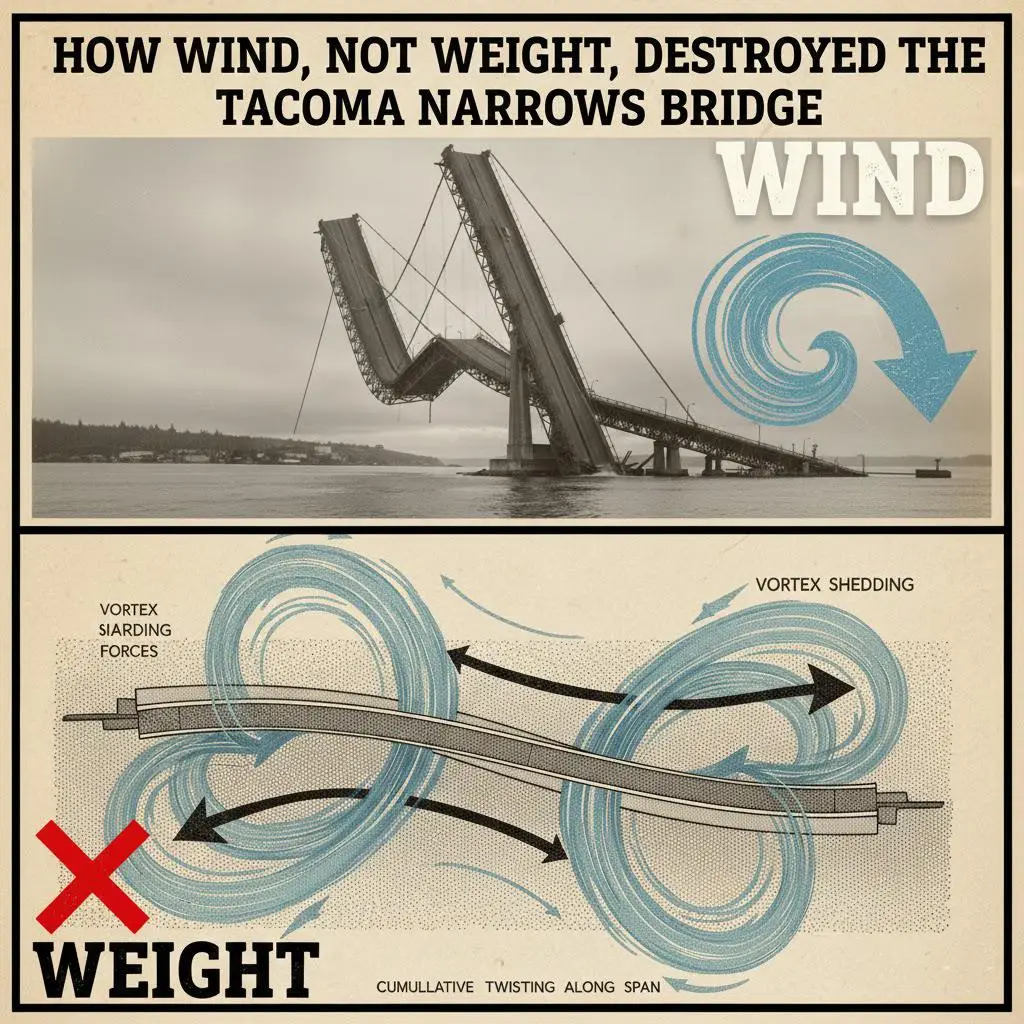
Imagine a sleek, modern bridge twisting and bouncing like a giant trampoline before plunging into the river below. That’s exactly what happened to the Tacoma Narrows Bridge on November 7, 1940—a spectacle so dramatic it’s become engineering legend. Often misremembered as a victim of heavy traffic or overload, this iconic failure was all about the wind. Let’s dive into the physics, the drama, and the lessons that still shape bridge design today.
What Was the Tacoma Narrows Bridge?
Opened just four months earlier in July 1940, the Tacoma Narrows Bridge spanned Puget Sound in Washington state. At 2,800 feet long with a slender, lightweight deck, it was an engineering marvel for its time—elegant and cost-effective. Nicknamed “Galloping Gertie” for its noticeable sway even on calm days, the bridge promised faster travel between Tacoma and the Kitsap Peninsula.
Engineers designed it with a narrow width and solid steel girders to save money during the Great Depression. But this slim profile would prove disastrous when the weather turned.
The Fateful Day: November 7, 1940
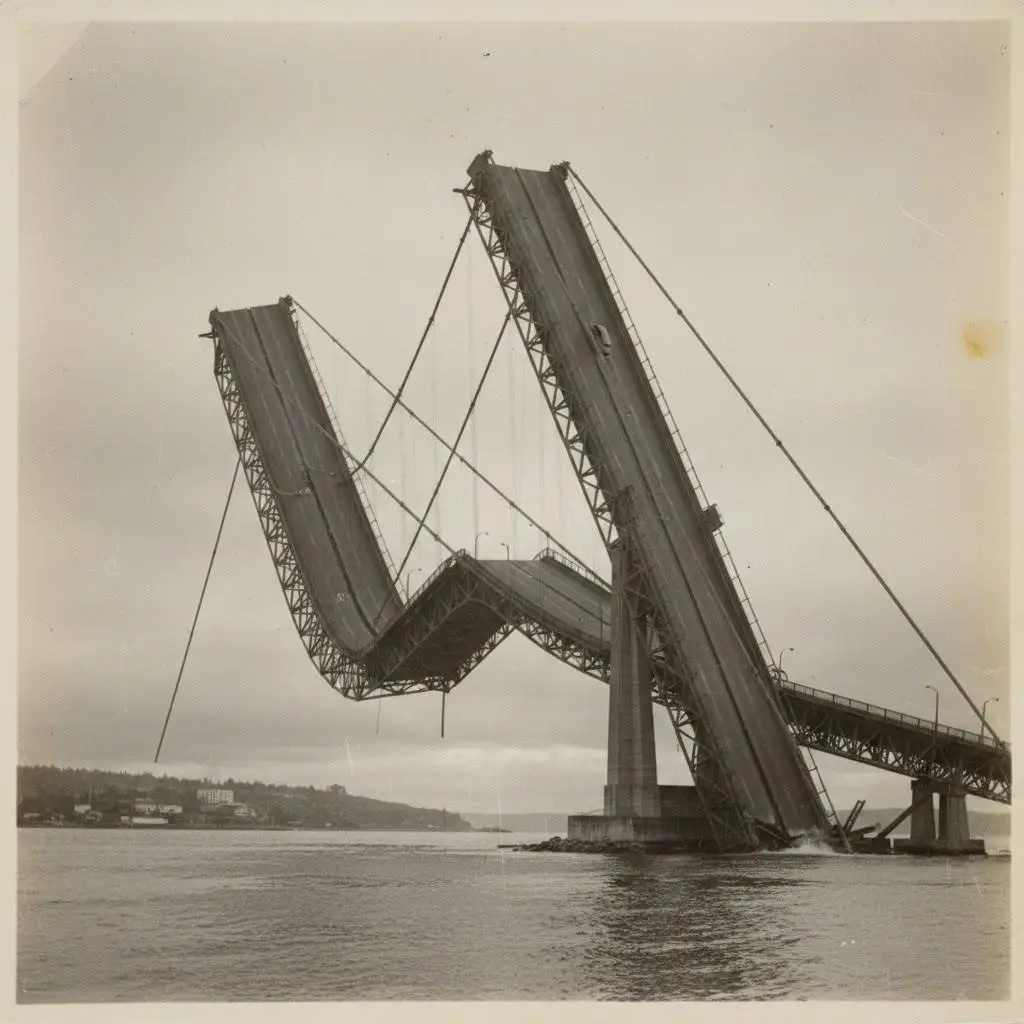
Gusts up to 42 mph whipped through the Narrows that afternoon. What started as a gentle roll escalated into violent oscillations. Drivers abandoned cars as the deck buckled and twisted up to 45 feet side-to-side. A lone reporter and a dog named Tubby were the last souls on board—miraculously, no human lives were lost, though Tubby didn’t make it.
By evening, the center span tore free and crashed 190 feet into the chilly waters below. The world watched in awe via newsreels, cementing “Galloping Gertie” as a symbol of hubris meets nature.
Wind, Not Weight: The Real Culprit
Common myth: The bridge failed under too much weight from traffic. Reality: It collapsed under empty conditions, with fewer than a dozen cars. The true destroyer was wind-induced aeroelastic flutter, a phenomenon where wind interacts with the structure to amplify vibrations.
Unlike simple overload, this was resonance amplified by aerodynamics. The bridge’s low natural frequency matched the wind’s rhythmic pushes, creating a feedback loop. Think of pushing a swing at just the right intervals—it builds higher and higher until disaster.
Key Physics Behind the Collapse
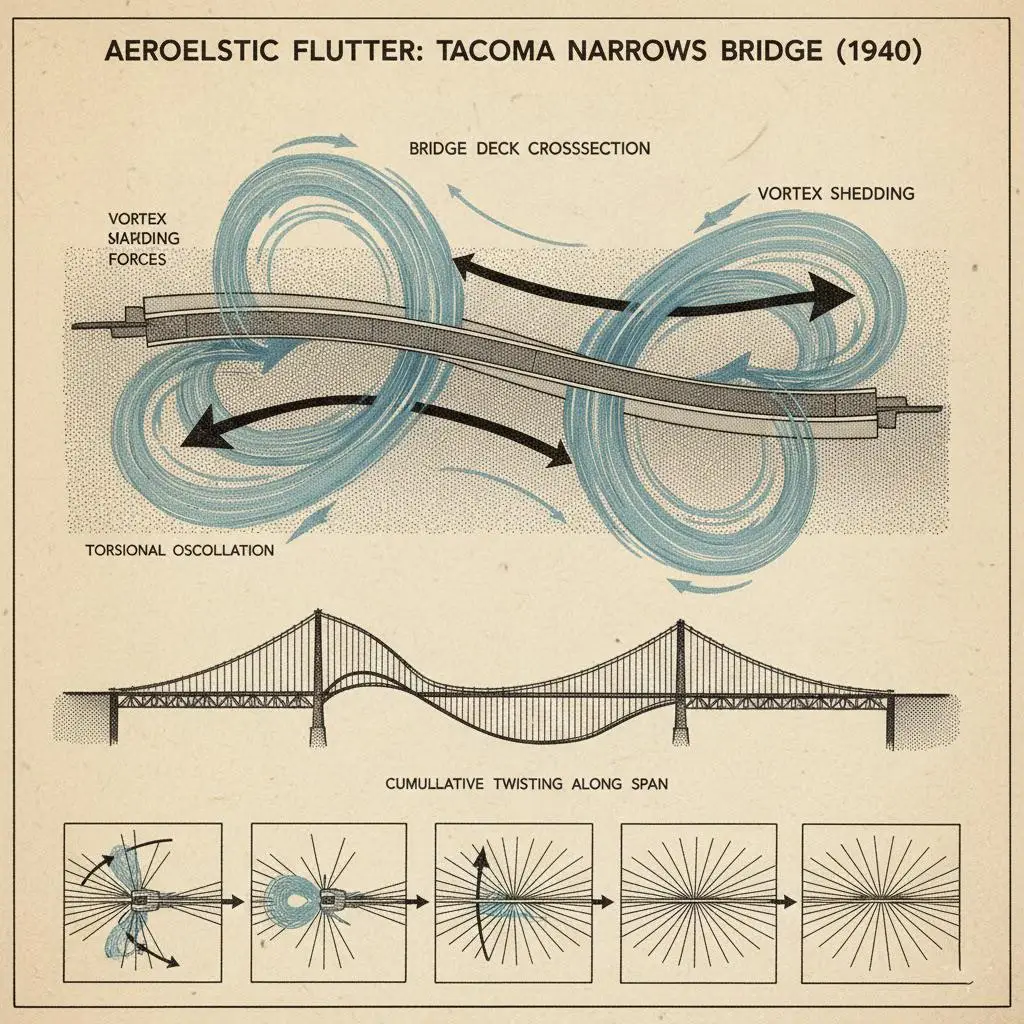
- Aeroelastic Flutter: Torsional vibrations where the deck twisted, altering airflow and generating more lift on one side, worsening the twist.
- Von Kármán Vortex Street: Wind vortices shedding alternately from the deck created oscillating forces at the bridge’s resonant frequency.
- Low Damping: The lightweight design lacked stiffness to absorb energy, letting motions grow unchecked.
Video footage (search “Tacoma Narrows Bridge collapse” on YouTube) shows the deck rippling like a flag in a gale—pure physics in action.
Engineering Lessons from Galloping Gertie
The collapse spurred a revolution in bridge design. Engineers now prioritize aerodynamics alongside strength. Modern simulations, powered by AI in engineering simulations, predict flutter before construction.
Major Changes Post-Collapse
- Added stiffening trusses and deeper girders on the 1950 replacement bridge, still standing today.
- Incorporated wind tunnel testing for all long-span bridges, like the Golden Gate and Verrazzano-Narrows.
- Tuned mass dampers now stabilize icons like Tokyo’s Skytree against wind and quakes.
Explore more on history of engineering failures to see how past mistakes pave the way for safer structures.
Why This Matters Today
In an era of mega-bridges like the 55-mile Danyang–Kunshan Grand Bridge, wind remains a top threat. Climate change brings fiercer storms, making these lessons urgent. From modern bridge designs to AI-driven predictions, we’ve come far—but nature always has the last word.
The Tacoma Narrows story reminds us: Engineering isn’t just about bearing weight. It’s about dancing with the wind.






![Modern bridge with embedded AI sensors and structural health monitoring data visualization [conversation_history]](https://historysprout.com/wp-content/uploads/2026/01/unnamed-2026-01-21T201734.882.webp)

Leave a Reply